

A Century of Conservation
BY JAMIE DOZIER
The Tom Yawkey Wildlife Center celebrates 100 years as a conservation legacy and an historic haven for wildlife.
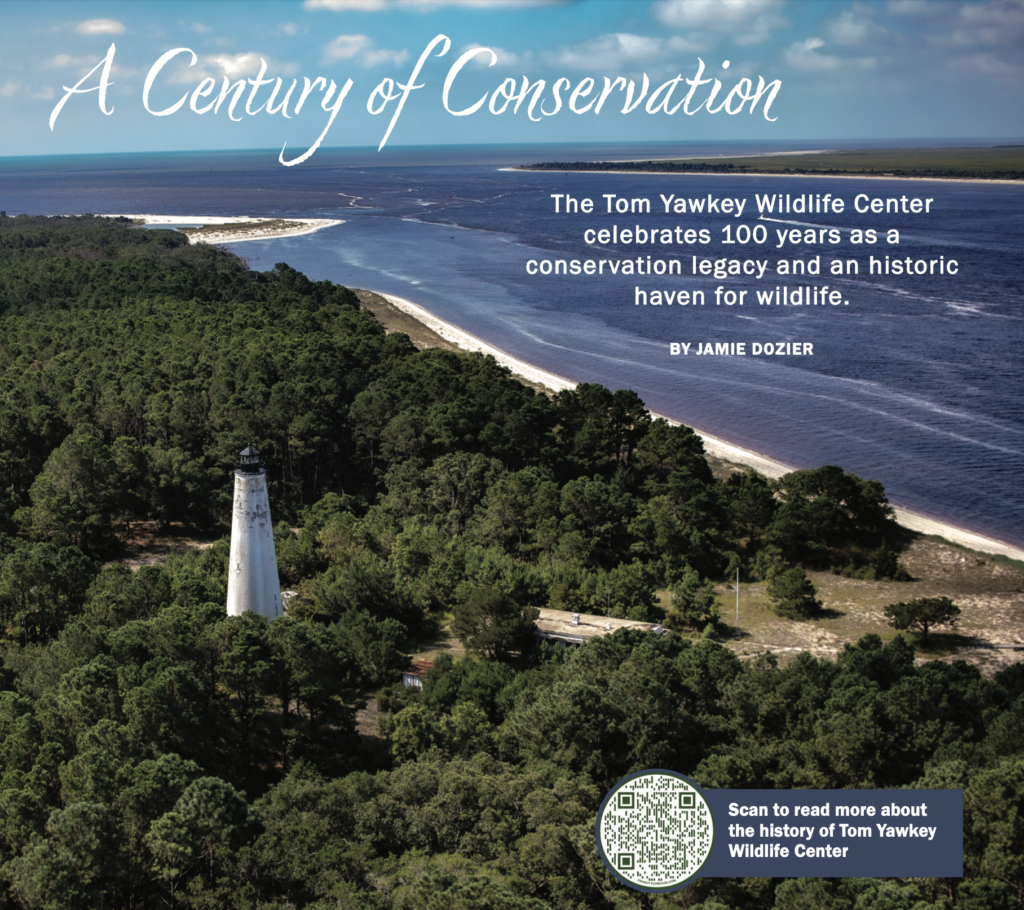
Considered one of the Lowcountry’s most iconic natural treasures, the Tom Yawkey Wildlife Center in Georgetown County is celebrating a century of conservation. This year marks one hundred years since founder Tom Yawkey purchased shares from surrounding property owners for the purpose of safeguarding more than 20,000 acres of land on Winyah Bay as a wildlife preserve, research area and waterfowl refuge. These outstanding tracts of land, later to be donated to the State of South Carolina, continue to be described as “one of the greatest gifts to conservation in the country.”
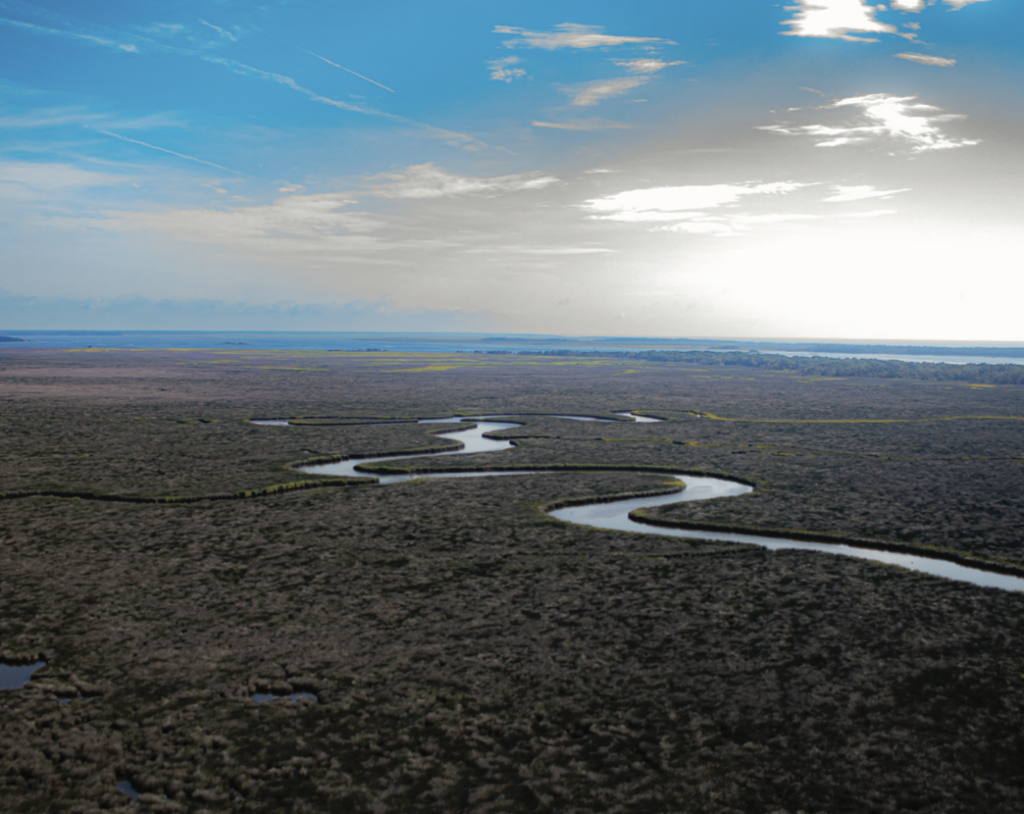
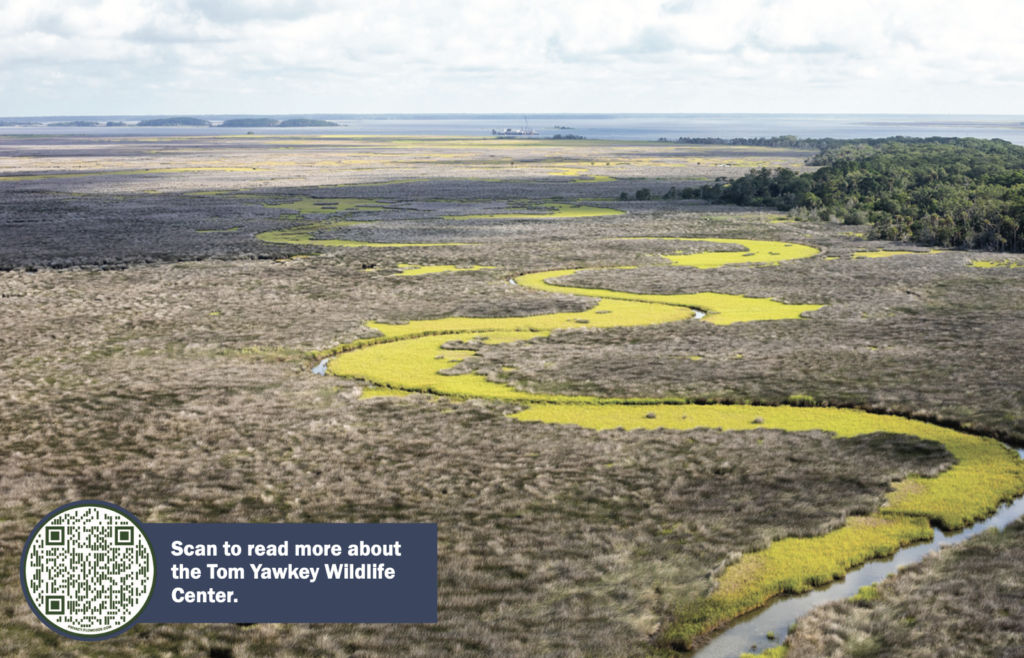
From its pioneering management of waterfowl, wetlands and wildlife management to the property’s uniquely diverse cultural and natural history, Yawkey Wildlife Center is an irreplaceable example of conservation success. The property encompasses North, South and Cat islands, and the heritage preserve now spans 24,000 acres of managed wetlands, undeveloped beachfront, salt marsh and longleaf pine flatwoods. These islands are to be protected in perpetuity, abiding by Tom Yawkey’s last will and testament.
These lands were bequeathed to the South Carolina Wildlife and Marine Resources Department, now named the South Carolina Department of Natural Resources. The expansive property is designated for wildlife protection, research and education.
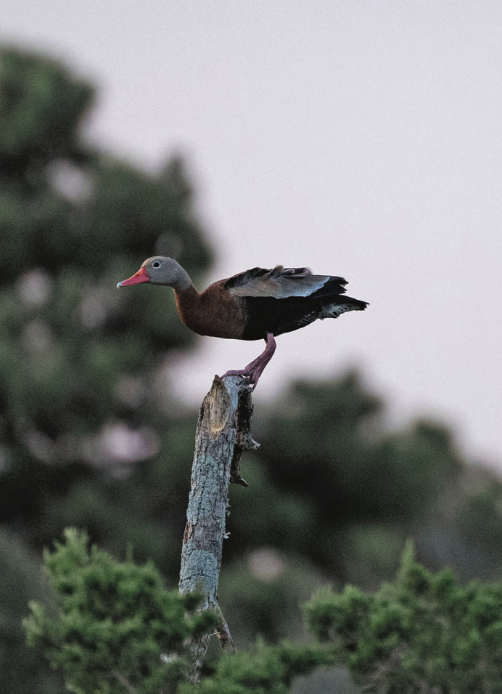
North Island is designated as a wilderness area, “where man is a visitor only, and without permanent structures or human habitation.” The remainder of the property is used as a managed refuge for migrating birds and a spectacular spectrum of flora and fauna. More than thirty-one square miles of varying habitats are found here, harboring brilliant arrays of waterfowl, wading birds, land birds, shorebirds and sea birds to American alligators, loggerhead sea turtles, white-tailed deer and an infinite number of other species.
Tom Yawkey also created and endowed the Yawkey Foundation to provide the sole funding for the operation, maintenance and upkeep of the Yawkey Wildlife Center. The SCDNR and Yawkey Foundation work in partnership to ensure the property is managed to the wishes set forth by Tom Yawkey in the gift agreement.
A Coastal Evolution
North, South, and Cat islands might have suffered the fate of becoming another golf course or subdivision, like many other barrier island complexes, if not for the vision, foresight, generosity, and timing of one individual, Tom Yawkey.
Some of the earliest explorers of North America, including the Spaniard Lucas Vazquez De Ayllón in 1526, may well have visited the islands. There is speculation that De Ayllón’s ship, the Capitana, may have run aground in the bay and possibly still be submerged around the South Island.
In 1777, French nobleman Marquis de Lafayette anchored his ship, the Victoire, at the entrance of Winyah Bay and rowed ashore onto “lonely North Island, where only a few summer residences existed,” as recorded in his journals. Once there, he vowed to fight on the side of liberty against British oppression.
Like most lands along the South Carolina coast, large tidal rice plantations were developed beginning in the 1700s. The Santee River wetlands on the southern side were ideal for growing rice. After the Civil War, most rice plantations fell into financial ruin and disrepair. Their decline provided an opportunity for sportsmen seeking excellent hunting grounds.
In 1869, General Edward Porter Alexander purchased North Island. Born in 1835 in Georgia, he graduated third in his class at West Point and later served as a Brigadier General in the Confederate Army. After the war, he became president of several railroads. He paid $766 (about 17 cents per acre) for North Island in 1869 and attempted to sell it for $4,500 in 1873, jokingly referring to it as his “Barreny.”
He later purchased most of South and Cat Islands in the early 1880s.
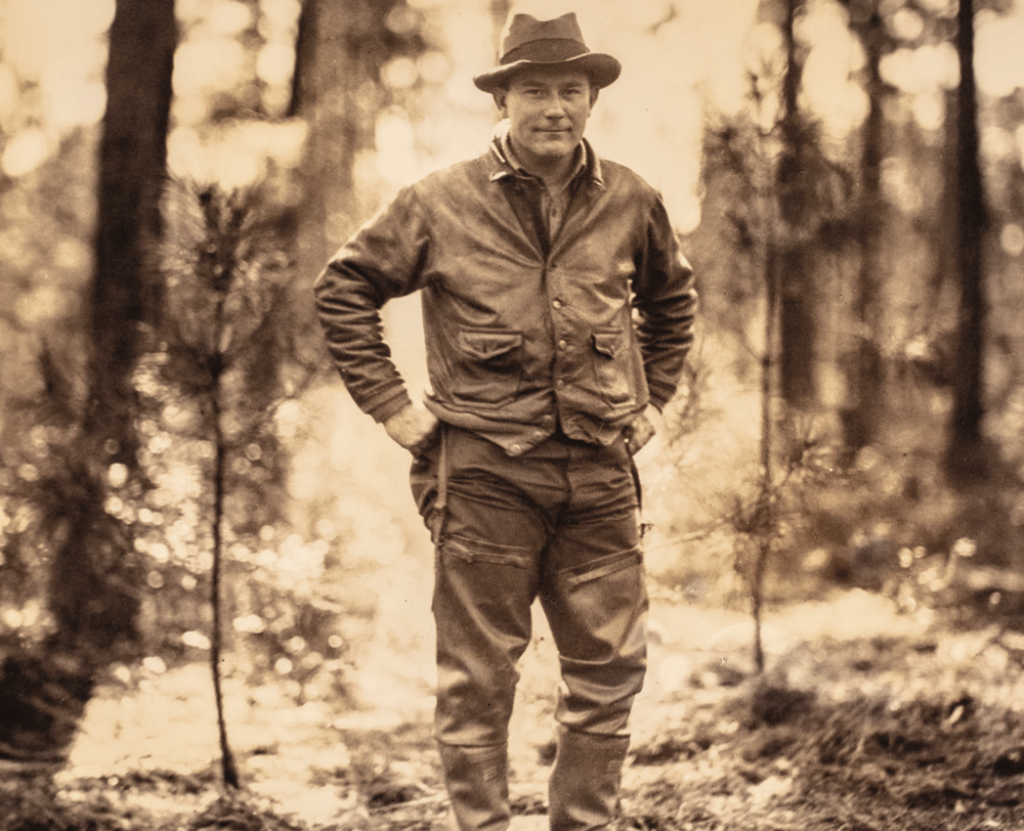
Alexander attempted many ventures, including pay hunting operations and raising crops such as asparagus. Though often near financial ruin, he refused to sell property he loved dearly. In failing health, he sold the islands in 1905 to Joseph Law Wheeler for $125,000.
Joseph Wheeler & The South Island Club
Joseph “Joe” Wheeler of Michigan made his fortune in timber and silver mining. He recognized the timber value of longleaf pine on Cat Island and estimated at least 30 million board feet worth $200,000. By around 1920, most of the timber had been logged.
In 1914, Wheeler chartered the South Island Club as a hunting club. Fifteen shares were sold. One member was Michigan businessman William Yawkey.
William Yawkey wintered on the South Island and also owned the Detroit Tigers baseball team. After his death from the Spanish Flu in 1918, the club eventually moved toward selling.
In 1925, 21-year-old Tom Yawkey completed the purchase of the remaining shares of the South Island Club for $105,000.
Conservation Legacies
Thomas Yawkey Austin was born in 1903 in Detroit. Orphaned young, he inherited his uncle William Yawkey’s estate at age sixteen.
He graduated cum laude from Yale University in 1925 with a degree in engineering. His studies influenced his lifelong passion for land management and conservation.
He fell in love with the South Island’s isolation, wildlife, and beauty. He wintered there annually and also purchased the Boston Red Sox in 1933, turning the struggling team around.
In 1944, he married Jean Hollander. Together, they shaped the future of the South Island.
Yawkey noticed declines in waterfowl flights and began habitat improvements:
- Reintroduced controlled burning
- Improved dikes and water control structures
- Constructed new ponds
- Experimented with salinity manipulation to encourage native waterfowl foods
He later hired professional wildlife biologists to assist.
In the early 1970s, Tom and Jean Yawkey ensured the property would not be developed. Tom mandated in his will that the property be donated to the South Carolina Wildlife and Marine Resources Department (now SCDNR). It would be used for wildlife research, education, and protection.
He also established the Yawkey Foundation to fund the property’s management in perpetuity.
Thomas Austin Yawkey died July 9, 1976, at age 73.
In 1977, South Island was dedicated as the Tom Yawkey Wildlife Center Heritage Preserve.
Tom Yawkey once said:
“I was always taught to help others and that those of us fortunate enough to be born with material abundance should do what we can for those who are not. I do what I can.”
Additional Information
Project Leader Jamie Dozier directs wildlife management, research, education, and outreach on North, South and Cat islands.
Learn more: